Having now completed my thru-hike of the Bibbulmun Track, I thought it was worth providing some thoughts on the trail as a whole. Hopefully, this will prove to be of some value to future thru-hikers (or end-to-enders as they are referred to in Australia) considering hiking the trail and also in planning their future hikes.
Trail overview
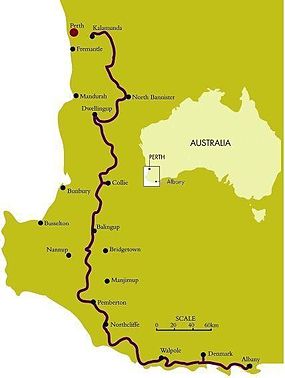
The route of the Bibbulmun Track
The route of the trail takes in the best of what Perth, the southwest and southern regions of Western Australia have to offer. From the extensive jarrah forests of the north, through the granite outcrops and viewpoints of the monadnocks, through the transition area to karri forest and onto the plains and wetlands and finally the southern coastal region. The trail allows the hiker to experience the best of these areas and to immerse oneself in the experience.
The trail is long enough in that it can grant a sufficiently extended hike to allow an individual to really get a proper thru-hike experience.
It is also short enough in that it is manageable for people to fit into their lives, particularly those who are in full-time employment and would find it difficult to take off longer periods of time. This hike can be accomplished without needing to resign from your job or take a career break (unless you would like to of course).
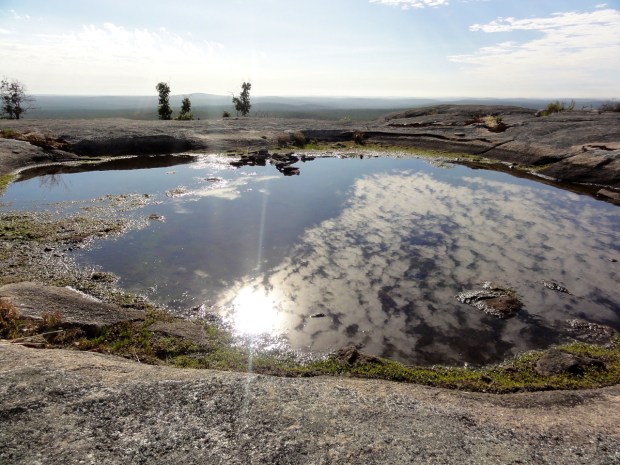
Monadnocks Conservation Park
The trail goes directly through several track towns which makes it a logistically easy trail to hike in comparison to trails such as the Pacific Crest Trail or the Continental Divide Trail where the resupply options can be a long way off trail. The only real difficulty is the first stretch from Kalamunda to Dwellingup given the closure of the facilities at North Bannister which could require up to a 9-day food carry without resupply. This section would obviously benefit from a light pack and higher daily mileages.

Balingup
The trail is also becoming more diverse in terms of those choosing to hike the trail. Whilst the figures from the Bibbulmun Track Foundation clearly indicate the majority are from Western Australia as you would expect, there is a growing number of interstate and also international hikers. The track is also much busier than it was even five years ago but it is still quiet by international standards. There was a time when it was quite likely that you would be the only hiker in certain shelters at certain times of the year. Now you can almost guarantee that you will have company. I attribute this partly to word of mouth as more people hike but it is also due to the fantastic website that is maintained by the Foundation. If you compare this to the websites maintained by other trail organisations (without naming any of course) you can see just how special and informative it is.
Trail length
The trail has been extended over recent years so it now exceeds the 1,000 km mark. Whilst this figure is obviously only a number and does not correspond to the value of the trail in itself, I feel that it is nice in some ways for hikers to be able to reflect on their accomplishment in covering this distance rather than the old number of 965 km.
I have heard rumours (which of course are only that) that the trail may be extended northwards towards Perth and eastwards towards Esperance. Whilst I appreciate that the former may have certain benefits in some respects, for me this is a backcountry trail and I don’t believe it should be extended past its northern terminus in Kalamunda. The nicety of the current northern terminus is that you are immediately into the area around Piesse Brook and away from roads and people. That is one of the attractions in walking the trail and to extend it through a city (similar to the way the Te Araroa goes through central Auckland) would detract from the experience significantly . Extending eastwards towards Esperance could be an interesting prospect if it is ever achieved. I imagine this would be a substantial undertaking if it was accomplished. There is also the aspect of what happens to existing end-to-enders should the trail be extended. Some may have mixed feelings should the eastwards extension ever come to pass.
Facilities and infrastructure
This is a great trail from the perspective of trail facilities and the supporting infrastructure. There is a huge network of volunteers (both maintenance and office based) who give up their time and skills to help maintain the track in first rate condition as well as provide administration and promotion. As I understand it, there is a substantial waiting list for trail volunteer positions, particularly in the northern sections. My hiking friend has been waiting for a trail spot for several years now. I think this is a real indicator of the health of the trail and also its future in that so many more people are willing to assist on the trail for free than there are positions available for them. This is a trail which is loved and cared for.
The facilities on the trail are world class. Whilst I have never hiked the Appalachian Trail, I have friends who have. The feedback is that the campsites on the AT pale into comparison with those on the Bibbulmun Track.
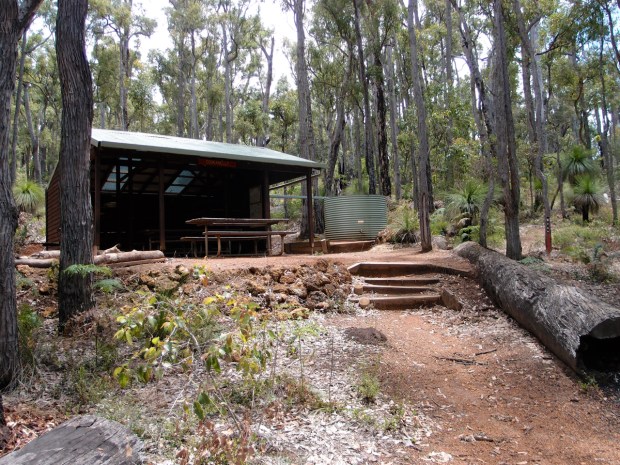
Dookanelly Campsite
The campsites on the Bibbulmum are cleaner, larger and just generally nicer than on the AT. All campsites have lots of shelter space, toilets and rainwater tanks. There are also rarely significant maintenance issues and the campsites are very well cared for.
Other matters
Whilst there are lots of positives to the trail, there are some things that potential hikers should be aware of.
The first point to raise was well described by an American hiker I met who had done extensive hiking along the AT and in the Whites. I came across him at Beedelup Falls and his exact words were “The Bibbulmun Track is a long trail, but not a great trail”. I agree with his comments although others obviously may not. Much of the trail can be a little monotonous with scenery that is fairly constant, particularly in the jarrah sections. The lack of viewpoints (with certain exceptions such as the Monadnocks and the southern coastal sections) can also make the trail experience a little ‘samey’ for much of the trail. Where there are views, however, they are often spectacular.
The second matter to be aware of is that this is a trail (as are many others) where the season you hike is important. Summer is too hot on many parts of the trail and subject to bushfire risk. The insects (namely flies, ticks, march flies and mosquitoes) can be absolutely horrendous. Winter is cool, rainy with short days. Spring is often the most preferred season by many due to milder temperatures, longer days and blossoming wildflowers. However, my personal preference is April/May. During that season, the temperatures are mild, there are no standing waters through the Pingerup Plains section and the inlets are all crossable by sandbars rather than by wading. It is a beautiful time of year although, like in any season outside summer, there is the risk of an occasional cold front.
Final thoughts
So do I recommend hiking the Bibbulmun Track? By now you may have gathered the answer to that is yes.
Whilst it is not known for its spectacular views, the trail has something special about it. Knowing it is loved and cared for by so many individuals and enjoyed by even more, makes it a trail worth hiking.
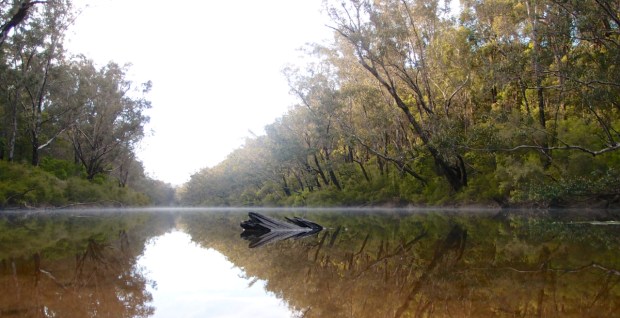
The Murray River
 Hike Now